 SJHYPS
What a Game Jam Actually Is
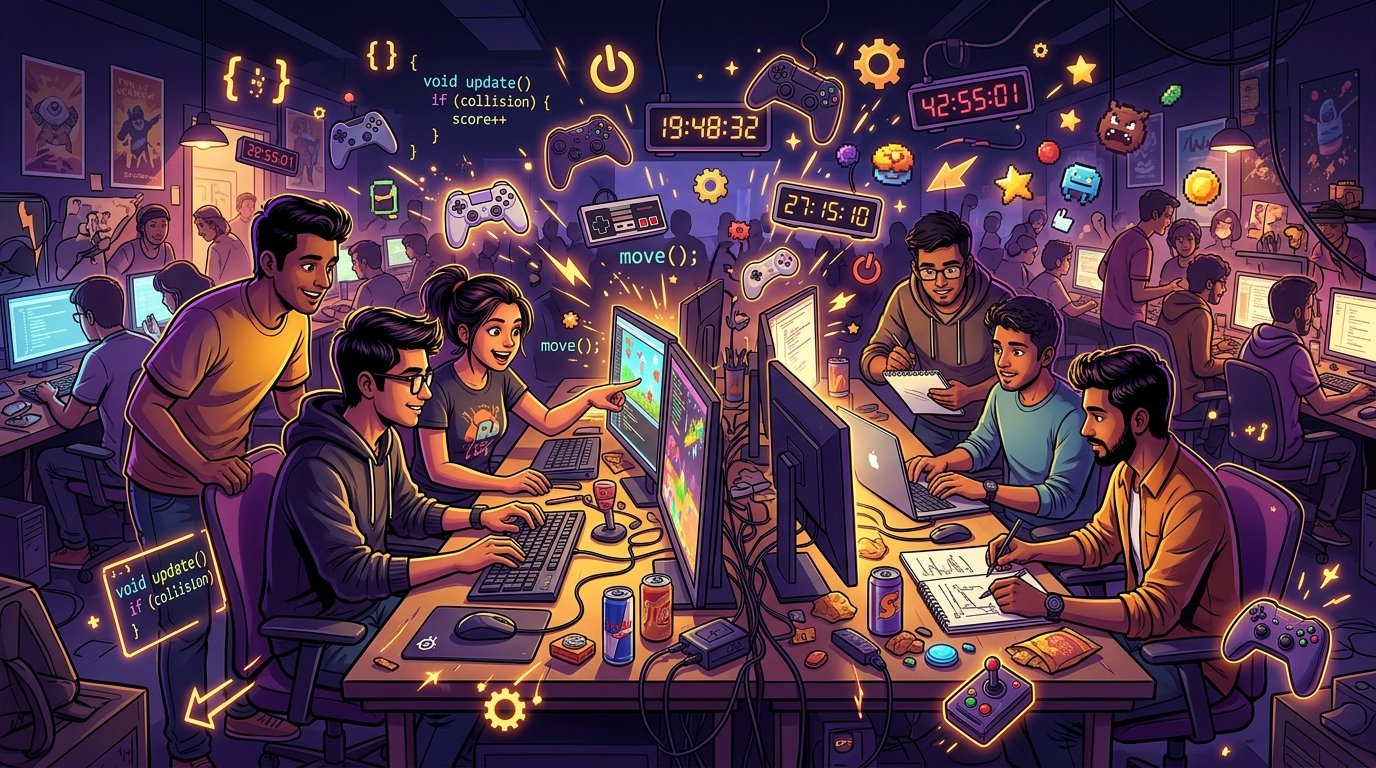
For those unfamiliar, a game jam is a time-limited event where participants form teams and build a playable game prototype from scratch, usually around a shared theme. The time limit varies — 24 hours, 48 hours, sometimes a full week. The goal is not to produce a polished product but to explore an idea under pressure and see what emerges.
India's game jam scene has grown considerably since the Global Game Jam started gaining traction in the country around 2015. Today there are dozens of events per year spread across major cities, ranging from university-organised student jams to professionally hosted events with industry mentors.
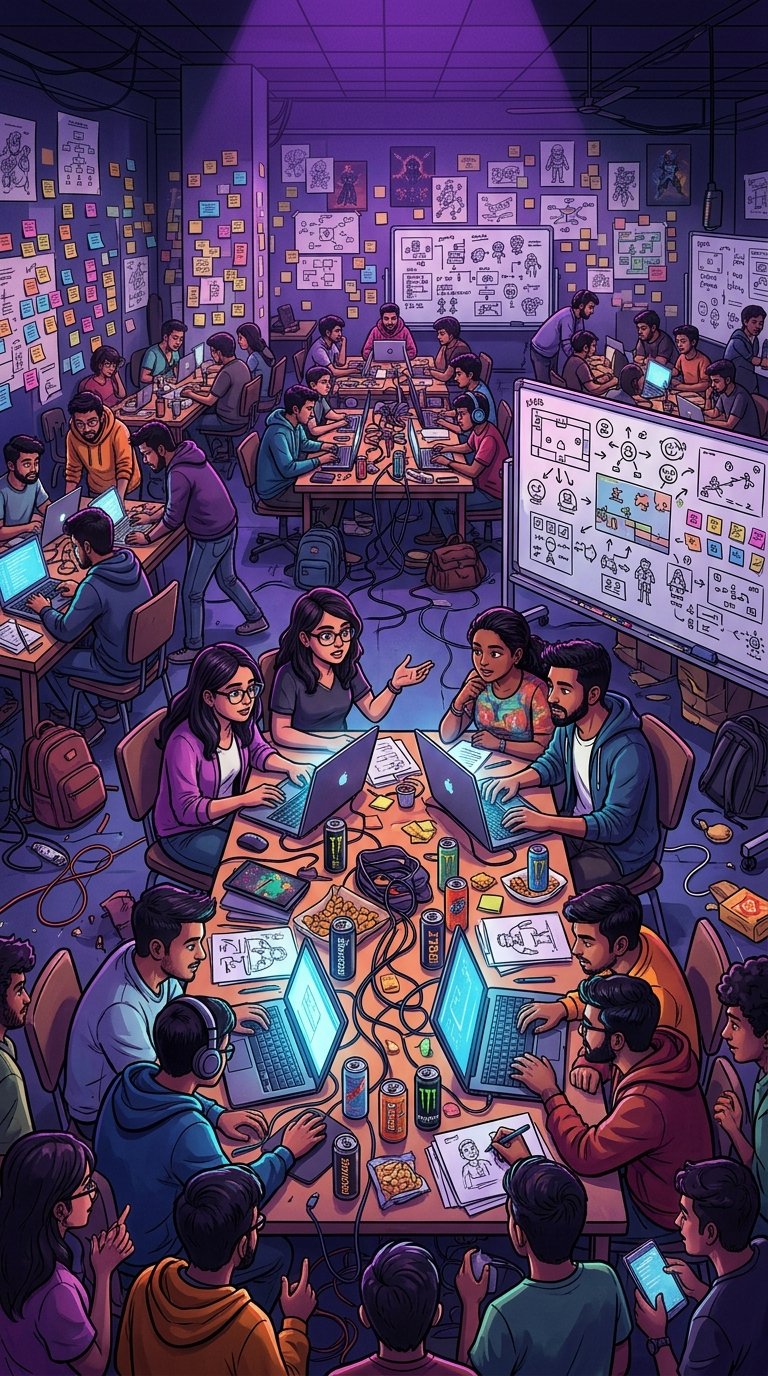
A typical game jam setup — shared workspace, tight deadlines, and a lot of caffeine.
The Major Events Worth Knowing
I have attended or followed several Indian game jams over the past three years. Here is what I have observed about the ones that matter most.
Global Game Jam (Indian sites)
The Global Game Jam runs every January and has multiple sites across India — Bangalore, Pune, Mumbai, Hyderabad, and Chennai are the most active. The quality varies enormously depending on the host venue. University-hosted sites tend to produce more experimental work because students have less to lose. Industry-hosted sites often produce more technically competent prototypes but sometimes lack the creative risk-taking that makes a jam interesting.
From what I have seen, the Bangalore and Pune sites consistently produce the strongest prototypes. This is partly because those cities have the highest concentration of game developers, which means more experienced participants and better mentorship availability.
NASSCOM Game Developer Conference Jams
The NASSCOM GDC occasionally hosts jam-style events as part of its conference programming. These are smaller and more curated than open game jams, typically limited to 15–20 teams. The advantage is higher baseline quality and access to industry contacts. The disadvantage is that they are harder to get into and tend to attract developers who are already somewhat established.
Independent and Community Jams
These are the ones I find most interesting. Organised by local developer communities, Discord groups, or individual studios, they tend to be smaller (10–30 participants) and more focused. Some are themed around specific technologies (a Godot jam, a Bitsy jam) and others around specific genres or constraints (a one-button game jam, a no-graphics jam). The best prototypes I have encountered at Indian game jams have almost always come from these smaller events.
| Event Type | Typical Size | Prototype Quality | Creative Risk |
|---|---|---|---|
| GGJ (university site) | 50–200 participants | Variable | High |
| GGJ (industry site) | 30–100 participants | Higher baseline | Medium |
| NASSCOM GDC Jam | 15–20 teams | High | Medium |
| Independent/community | 10–30 participants | Variable | Highest |
How to Prepare
If you are planning to attend a game jam for the first time, here are some practical suggestions based on what I have seen work — and fail — repeatedly.
Bring your own tools. Do not assume the venue will have reliable Wi-Fi, power strips for everyone, or software pre-installed. Bring your laptop with your preferred engine already installed and working. Download any assets or documentation you might need before you arrive. I have watched teams lose three hours of a 48-hour jam trying to get Unity to download on venue Wi-Fi that couldn't handle it.
Scope ruthlessly. The single most common reason game jam prototypes fail is overscoping. Teams try to build too much. A game that does one thing well is always more impressive than a game that does five things poorly. Decide on the smallest possible version of your idea and build that first. If you have time left over, add more. You almost never will.
Plan for audio early. Audio is the element that most game jam teams neglect, and it is the element that most distinguishes a good prototype from a forgettable one. Even simple sound effects and a basic ambient track make an enormous difference in how a game feels. If your team does not include someone with audio skills, at minimum plan to use freely available sound libraries rather than shipping a silent game.
Sleep. This sounds obvious, but it needs saying. I have seen multiple teams produce worse work on the second day of a 48-hour jam because they pulled an all-nighter and then made poor decisions while exhausted. A rested team working eight focused hours will outperform a sleep-deprived team working twenty unfocused ones.
Which Jams Lead to Finished Games?
This is the question I get asked most often, and the honest answer is: not many. The conversion rate from game jam prototype to released game is low everywhere, not just in India. But based on my observation, the prototypes most likely to become finished games share certain characteristics.
They are made by teams that already knew each other before the jam. Strangers who form at the event rarely continue working together afterward. They are made by teams where at least one person has shipped a game before, even a small one. They are made by teams that treat the jam as a starting point rather than a deadline — meaning they plan from the beginning to continue development afterward.
The smaller community jams produce the highest conversion rate in my experience, probably because the participants are self-selected for commitment. If someone takes the time to find and join a niche Discord-organised jam, they are more likely to be the kind of person who follows through on a project.
The Honest Take
Game jams are valuable. They produce prototypes that would never exist otherwise, they connect developers who might not otherwise meet, and they force a kind of focused creative work that is hard to replicate in normal development cycles. But they are not a substitute for sustained development effort. The best thing that can come out of a game jam is the motivation to keep working on the idea after the event ends.
If you are a developer considering your first jam, just go. Don't worry about producing something impressive. The value is in the process and the people you meet, not the prototype. And if you do produce something you're proud of, send it to me — I'd like to play it.

Patricia Ramirez
Editor and founder of SJHYPS. Based in Mumbai, Maharashtra. I cover independent and creative games from Indian developers. This is a personal project separate from my work at Digital Wave.
Further Reading
- Why Indian Indie Games Deserve More Attention — SJHYPS
- Art Direction on a Zero Budget — SJHYPS
- About SJHYPS — editorial methodology and background
- Upcoming game jams on itch.io